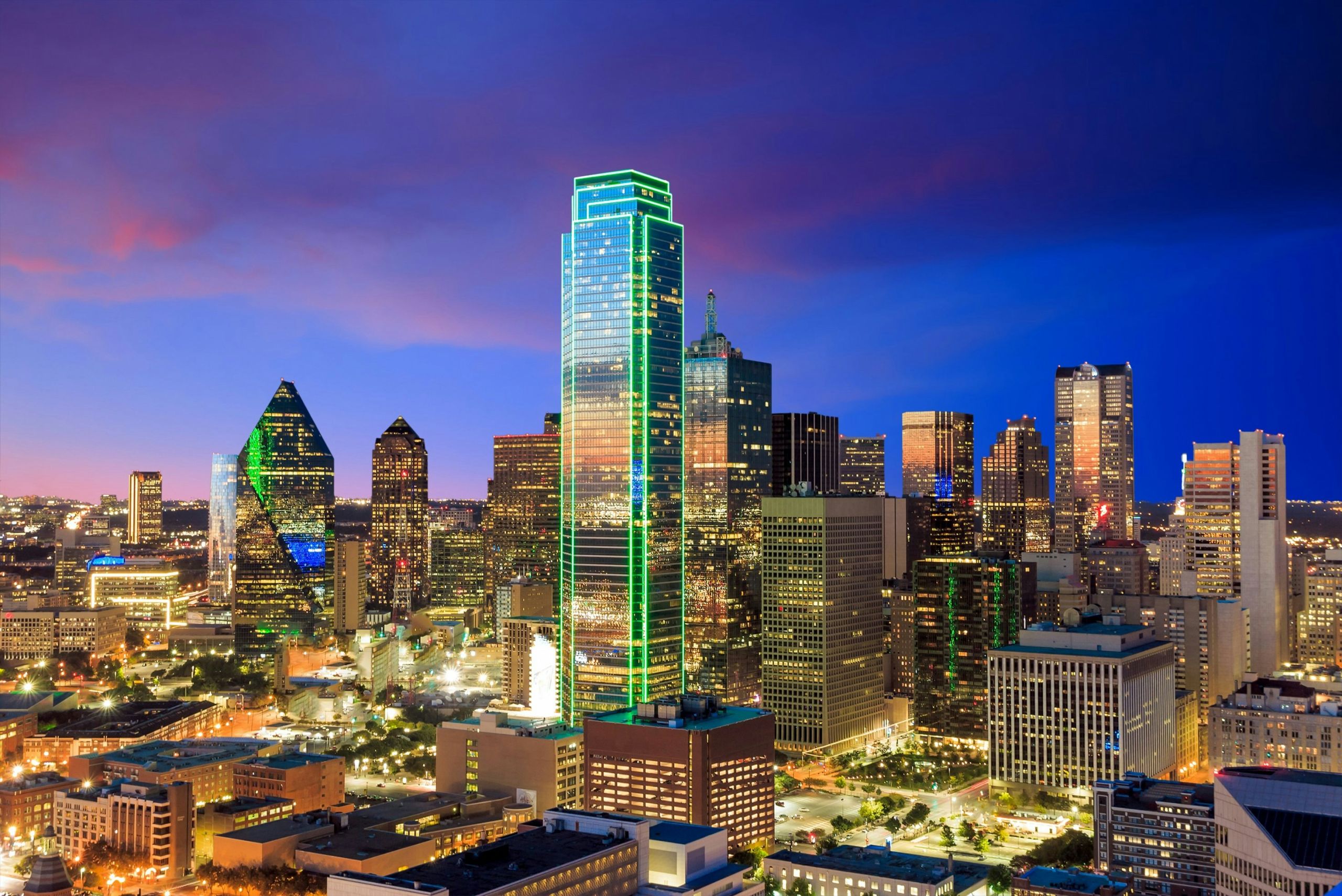
Texas opened May 2026 with a series of announcements that underscored its continued dominance as the nation’s leading destination for corporate investment, population growth, and large-scale economic development. The Dallas-Fort Worth metro drove much of the activity, with a landmark headquarters relocation, major mixed-use groundbreakings, and a wave of AI infrastructure investment all unfolding in quick succession. Population data released this month by the U.S. Census Bureau reaffirmed Texas’s exceptional growth trajectory, with eight of the 15 fastest-growing cities in the United States located in the state. (Texas Tribune)
The Dallas Federal Reserve projects Texas employment to grow 1.9 percent in 2026, with construction and data center-related activity serving as key drivers. DFW has led the nation in workforce growth this decade, adding 450,000 net new jobs, and the metro’s diversified economy spanning professional services, technology, healthcare, finance, and energy continues to attract corporate headquarters relocations at a pace that outpaces any other American market. (Dallas Fed)
AT&T’s $1.35 Billion Plano Campus Advances With $400M JPMorgan Financing
AT&T’s planned move of its global headquarters from downtown Dallas to a new 54-acre campus in Plano cleared a major milestone this month when JPMorgan Chase provided a $400 million construction loan for the project. The transaction signals strong institutional confidence in the campus and in Plano’s trajectory as a premier destination for major corporate operations in North Texas. (The Real Deal)
“This move allows us to cost-effectively consolidate our largest locations into a purpose-built campus that reflects who we are as a company and where we are headed.”
— John Stankey, President and CEO, AT&T
The Plano City Council previously approved a $20 million grant and property tax incentives in connection with the project. AT&T is required to invest at least $1.35 billion in construction, create 10,000 jobs by the end of 2039, and occupy the campus for a minimum of 25 years. The 280-foot headquarters tower will be topped with the company’s iconic logo, making it a defining feature of the Plano skyline. The full campus will include two million square feet of office, amenity, and retail space. (WFAA)
Westside Village Breaks Ground in Fort Worth, Cementing the City’s Development Momentum
The $1.7 billion Westside Village mixed-use development officially broke ground in March 2026 near Fort Worth’s Cultural District, representing the largest office project to start construction in the city in more than 40 years. The 37-acre project is a joint venture between Dallas-based Larkspur Capital and Robert Bass’s Keystone Group. When fully built out across four phases by 2035, it will include 880,000 square feet of office space, 238,000 square feet of retail, a boutique hotel, and 1,785 apartments. (Fort Worth Report)
Phase I includes a Class AA office building and a 308-unit luxury residential community, with ground-floor retail and restaurant concepts. The Fort Worth City Council approved a $125 million incentive package in support of the project. Fort Worth’s annual growth rate of 2.05 percent continues to outpace most large American cities. The city’s development pipeline reflects increasing confidence from institutional developers in the market’s long-term residential and commercial absorption capacity. (Fort Worth Inc.)
Adding to Fort Worth’s May activity, two unnamed companies were reported to be considering expansion projects in the city that could collectively bring nearly $1 billion in additional investment, according to the Fort Worth Report. The Fort Worth Chamber also launched a formal Regional Economic Development Partnership, aimed at coordinating growth strategy across the western side of the DFW metro. (Fort Worth Report)
Google, Stargate, and DataBank Lead AI Data Center Investment Surge
Google announced a $40 billion investment in Texas to expand its AI data center infrastructure, a commitment that spans multiple new campuses across the state. The company’s Red Oak data center in Ellis County, south of Dallas, is now operational, with additional capacity coming online at its Midlothian campus. Google cited Texas’s energy capacity, land availability, and workforce depth as key factors in selecting the state for its largest domestic data center expansion. (NBC DFW)
“Texas’s combination of power infrastructure, business climate, and talent depth makes it the natural choice for expanding our AI data center footprint at this scale.”
— Google spokesperson, CoStar
Dallas-based DataBank secured a $2 billion construction loan in late April for its Red Oak data center expansion, one of the largest single financing transactions in the Texas data center sector this year. (Data Center Dynamics)
The Japan-Texas Economic Summit took place in Arlington, gathering senior leaders from Japan and Texas to deepen cross-border investment ties. The three-day event underscored Texas’s growing role in international trade relationships, particularly with Japanese technology and manufacturing firms that have been expanding their U.S. footprints across North Texas. (Fort Worth Inc.)

Census Data Confirms Texas as the Nation’s Top Growth State
The new U.S. Census Bureau confirmed that Texas continues to lead all states in population growth. Eight of the 15 fastest-growing cities in the United States are located in Texas. Growth is concentrated in North Texas’s far-flung suburbs, with smaller cities in the DFW exurban ring recording among the fastest expansion rates in the nation. Texas attracts more than 500,000 new residents annually, roughly 1,600 new arrivals per day. (Texas Tribune)
North Texas’s growth story is increasingly driven by outlying suburban markets. Collin County added nearly 43,000 residents in a recent 12-month period, ranking second in the nation for numeric population gain among all U.S. counties. The growth is fueling new home construction, school development, and retail expansion across a broad arc of communities north and west of Dallas. (KERA News)
Apartment Market: DFW Ranks Second Nationally in New Supply
Dallas-Fort Worth ranked second in the nation for apartment construction in 2025, with nearly 29,000 units under development, and the pipeline remains active in 2026. More than 5,200 newly built units are currently available across the metro, with additional deliveries scheduled throughout the year. Uptown Dallas, Turtle Creek, and the Katy Trail corridor remain the most active luxury development submarkets, while northern corridors in Prosper, Wylie, and Rowlett are absorbing suburban demand. (Taco Street Locating)
In Allen, a suburb northeast of Dallas, community impact reporting this month documented three active multifamily projects at various stages of construction, reflecting sustained developer interest in Collin County’s high-growth residential markets. More than 25,000 new households are projected to form in DFW in 2026 alone, providing durable demand support for the apartment pipeline. (Community Impact)
DFW’s housing market is entering a more balanced period following elevated supply additions in 2024 and 2025. DART’s Silver Line, scheduled to open in 2026, is expected to reduce commute times by 20 to 30 percent along key corridors, potentially reshaping demand patterns in favor of transit-adjacent development submarkets. HousingWire characterized the market as entering a ‘reset’ phase rather than a softening, with underlying demand drivers remaining structurally intact. (HousingWire)
Conclusion
Texas’s May 2026 economic landscape reflects a market of exceptional scale and momentum across multiple growth vectors simultaneously. AT&T’s Plano headquarters campus advanced with a major financing commitment, affirming the continued shift of major corporate operations northward along the DFW corridor. Fort Worth’s Westside Village represents the largest mixed-use project to break ground in that city in a generation, while AI data center investment from Google and DataBank is cementing Texas’s role as the nation’s digital infrastructure backbone. Census data confirmed what developers and employers have been tracking: Texas is the country’s premier growth destination, with eight of the 15 fastest-growing American cities located within its borders. The apartment market is entering a balanced phase supported by sustained household formation, and infrastructure investment such as DART’s Silver Line is setting the stage for continued transit-driven development. Across Dallas, Fort Worth, Plano, Arlington, and Garland, the economic fundamentals remain among the strongest of any metro in the United States.
About Rise48 Equity:
Rise48 Equity is a Multifamily Investment Group with local offices in Phoenix, AZ, Dallas, TX, and Charlotte, NC. “At Rise48 Equity, we provide opportunities for accredited and non-accredited investors to protect and grow their wealth and achieve passive cash flow. Our team brings expertise to acquire, reposition, and return capital to investors upon reaching our business plan. Through our research and strategically formed partnerships, we acquire commercial multifamily apartment properties, strategically add value to the properties, and create passive income for our investors through cash flow and profits from the sale.”
Since 2019, Rise48 Equity has completed over $2.4 Billion+ in total transactions and currently has $2 Billion assets under management located in Arizona, Texas, and North Carolina. All of the company’s assets under management are managed by Rise48 Equity’s vertically integrated property management company, Rise48 Communities.