


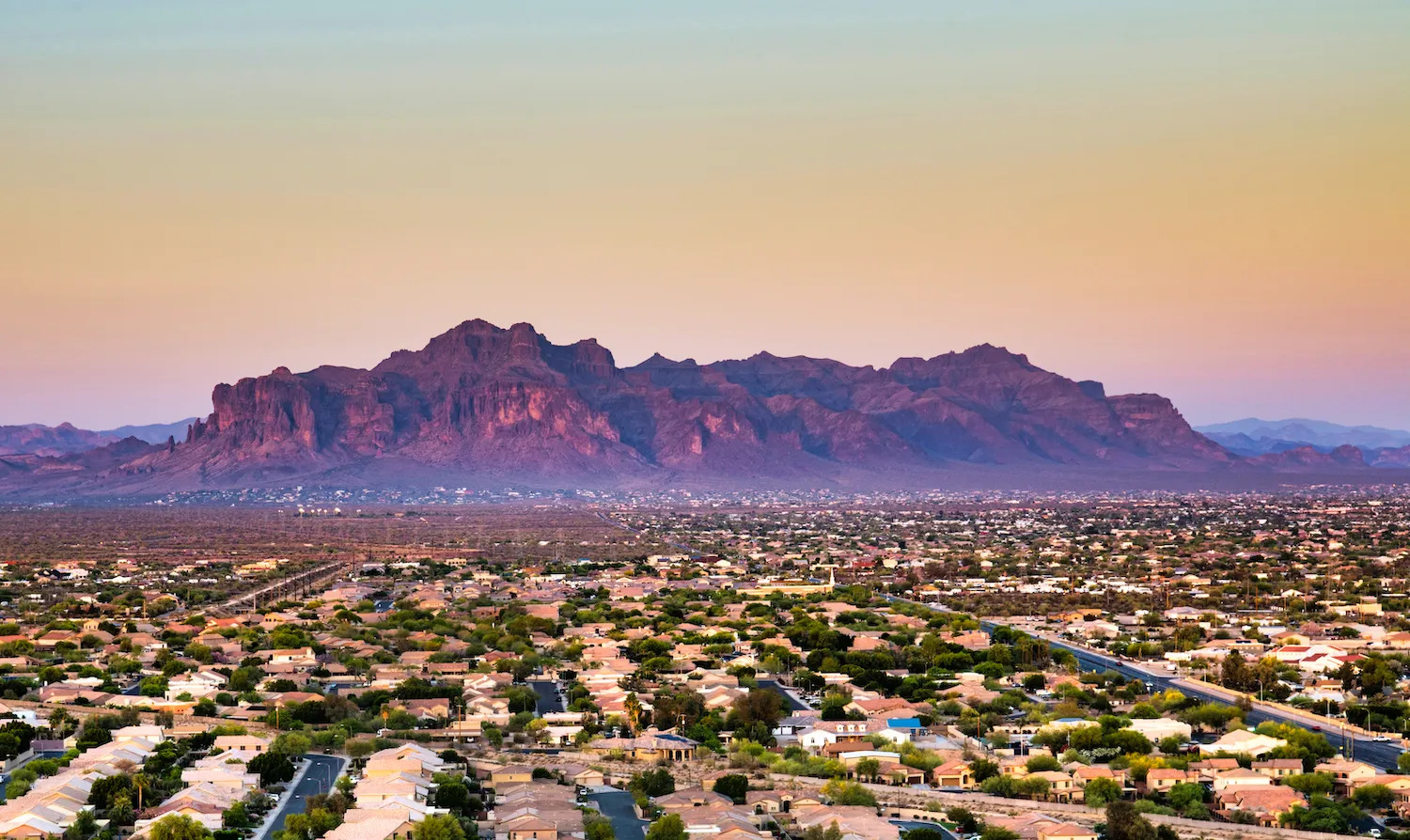
The East Valley accounts for over 845,000 jobs across Tempe, Mesa, Chandler, Gilbert, and Queen Creek, representing more than one-third of the Phoenix metropolitan area’s total employment (PHX East Valley Partnership). That concentration creates housing demand patterns where proximity to employment centers drives apartment performance.
The East Valley evolved from suburban bedroom communities to diversified employment centers, changing what drives apartment occupancy and rent growth. Submarkets within 15-20 minutes of major employers demonstrate stronger occupancy and rent performance than those relying primarily on affordability in distant locations.
Quick Stats: East Valley Employment and Apartments
Total East Valley Employment: 845,301 jobs across Tempe, Mesa, Chandler, Gilbert, and Queen Creek (PHX East Valley Partnership)
Intel Chandler Expansion: $20 billion investment creating thousands of manufacturing jobs (Intel)
TSMC Investment: $65 billion committed to Arizona semiconductor facilities (TSMC)
State Farm Tempe: Approximately 6,600 employees at Marina Heights regional campus (Phoenix Business Journal)
Arizona State University: 21,800 total employees, 194,000+ students (Arizona Board of Regents, ASU)
Average East Valley Occupancy: 92.4% in early 2026 despite 8,000+ new units delivered (AZ Big Media)
Employment Concentration Creates Distinct Demand
The East Valley developed multiple employment concentrations rather than a single downtown. Technology firms concentrate in Tempe and Chandler. Advanced manufacturing anchors Mesa and Chandler. Healthcare and education employment strengthen Mesa and Tempe.
Average occupancy in the East Valley reached 92.4 percent in early 2026 despite the delivery of over 8,000 new units in the previous year (AZ Big Media). Properties near major employment centers maintained occupancy above these averages.
Tempe: Technology and Corporate Employment
State Farm employs approximately 6,600 people at its Marina Heights regional campus (Phoenix Business Journal). The company announced plans to add 1,000 employees under a hybrid work arrangement, where workers spend roughly 20 percent of their time in the office (Patch Tempe).
Arizona State University employs 15,605 benefits-eligible workers, with total payroll reaching approximately 21,800 employees (Arizona Board of Regents). Enrollment exceeds 194,000 students across all campuses and online programs (Arizona State University). This combination generates rental demand from faculty, staff, graduate students, and young professionals who remain in the area after graduation.
Technology companies, including Carvana, ZipRecruiter, and GoDaddy, expanded operations, attracting workers who typically rent longer before buying homes. Average apartment rents in Tempe reached approximately $1,950 monthly in early 2026, with occupancy at 92.1 percent (AZ Big Media).
Mesa: Manufacturing and Healthcare Employment
Mesa’s employment base exceeds 200,000 jobs. Boeing operates a major aerospace facility in Arizona, employing approximately 4,800 workers, with the vast majority based at the Mesa Apache helicopter site (Boeing). Healthcare employment expanded through Banner Health facilities. Mesa Community College adds stability to the education sector.
Mesa’s multifamily market includes a significant inventory of older properties from the 1980s and 1990s. These Class B and Class C apartments serve workforce renters seeking functional housing at wage-aligned rents. Average rents reached approximately $1,650 monthly in early 2026, with occupancy at 91.5 percent (AZ Big Media).
Properties within reasonable commuting distance to Boeing, healthcare facilities, and Mesa Community College outperform those farther from these centers. As Class A rents climbed during the pandemic, demand concentrated in older properties offering proximity to jobs at moderate price points.

Chandler: Semiconductor Manufacturing Drives Long-Term Demand
Intel’s campus employs over 12,000 workers and announced a $20 billion expansion, adding two semiconductor fabrication facilities (Intel). Taiwan Semiconductor Manufacturing Company (TSMC) committed $65 billion to Arizona facilities, including advanced semiconductor manufacturing near Chandler (TSMC). The facilities create thousands of direct jobs, plus additional positions in supplier and support industries.
The concentration of semiconductor manufacturing creates demand for apartments from engineers, technicians, construction workers, and service employees. Technology companies beyond semiconductors also expanded in Chandler, including PayPal and Microchip Technology.
Average apartment rents in Chandler reached approximately $1,875 monthly in early 2026, with occupancy at 93.4 percent (AZ Big Media). The scale of semiconductor investment suggests demand will remain strong across asset classes. Older apartments offering wage-aligned rents for manufacturing technicians and construction workers maintain relevance as facilities ramp production.
Chandler’s employment growth visibility extends years into the future. Semiconductor facilities require years to construct and decades to operate, creating employment demand that persists through economic cycles.
Gilbert: Employment Growth Follows Residential Expansion
Gilbert’s employment base grew to over 90,000 jobs as the town evolved from a bedroom community to an economic center. Professional services, healthcare, retail, and education lead employment. Banner Health facilities employ thousands of healthcare workers. The town attracted corporate offices and professional services firms seeking locations between Phoenix and the Southeast Valley employment centers.
Many residents commute to jobs in adjacent cities, creating apartment demand driven by employment accessibility. Average apartment rents were approximately $1,910 per month in early 2026, with occupancy at 92.8 percent (AZ Big Media).
Properties near healthcare facilities, corporate campuses, and major commute corridors to Chandler and Mesa maintain stronger occupancy than those positioned in residential neighborhoods far from employment. Gilbert’s emphasis on quality of life and schools attracts renters who might eventually buy homes, creating different turnover dynamics.
Queen Creek: Emerging Employment and Rapid Growth
Queen Creek represents the East Valley’s newest employment growth area. The town grew rapidly as residential development expanded eastward. Employment remains limited compared to Tempe, Mesa, and Chandler, but the area benefits from improved access to infrastructure.
State Route 24 extends east from the Loop 202 through Mesa and Queen Creek, providing access to the Phoenix-Mesa Gateway Airport area (ADOT). The most recent extension from Ellsworth Road to Ironwood Drive opened in 2022. Construction on an extension to Ironwood Drive is scheduled to start in late 2026.
Queen Creek’s residential growth outpaced employment development, creating a community where many residents commute to jobs elsewhere in the East Valley. Properties positioned near State Route 24 and major commute corridors serve residents working in Chandler’s semiconductor facilities and Mesa’s aerospace employment.
Infrastructure Expansion Improves Employment Access
Ellsworth Road widening between Germann Road and State Route 24 was substantially completed by mid-2024 (City of Mesa). The expansion to three lanes in each direction eased congestion near the State Route 24 interchange, improving commute times for workers traveling between Mesa, Chandler, and Gilbert.
The Loop 101 freeway, US 60, and Loop 202 create accessibility to multiple employment centers. Properties near these routes attract renters working across different submarkets. Commute times matter more than rent discounts for workers prioritizing convenience.
Properties within 15-20 minutes of major employers demonstrate higher occupancy than those requiring 30-plus-minute commutes. The East Valley’s geographic spread means apartment location relative to jobs matters more than city boundaries.

What East Valley Employment Means for Apartment Investors
East Valley employment centers create multifamily demand patterns distinct from the broader Phoenix market. Job growth in semiconductors, aerospace, technology, healthcare, and professional services supports apartment demand at various price points.
Properties within reasonable commuting distance of Intel, TSMC, Boeing, State Farm, and Arizona State University maintain occupancy and pricing power. Employment growth visibility extends years ahead. Semiconductor manufacturing investments represent decades-long commitments. Healthcare systems continue expanding. Arizona State University enrollment grows.
Class B and Class C properties serving workforce renters remain relevant. Semiconductor manufacturing, aerospace, and healthcare create jobs at various wage levels. Apartments offering functional housing at wage-aligned rents near employment centers outperform those positioned primarily on amenities without employment proximity.
Average occupancy across the East Valley remained above 91 percent in early 2026 despite record deliveries of new supply. Properties near major employment centers maintained occupancy above market averages. Employment concentration, not just population growth, determines where multifamily demand remains most durable.
FAQ: East Valley Employment and Apartment Demand
Which East Valley cities have the strongest employment growth?
Chandler and Tempe lead East Valley employment growth. Chandler’s Intel and TSMC facilities represent over $85 billion in semiconductor manufacturing investment, creating thousands of high-wage positions. Tempe added technology and professional services employment through State Farm, Carvana, ZipRecruiter, and Arizona State University expansion (Intel, TSMC, PHX East Valley Partnership).
How does employment concentration affect apartment demand in the East Valley?
Employment concentration creates demand patterns where proximity to job centers drives occupancy and rent performance. Properties within 15-20 minutes of major employers like Intel, TSMC, Boeing, and State Farm demonstrate stronger fundamentals. East Valley occupancy averaged 92.4 percent in early 2026, with properties near employment centers maintaining occupancy above market averages (AZ Big Media).
What types of jobs drive East Valley apartment demand?
Semiconductor manufacturing, aerospace, technology, healthcare, and professional services jobs drive demand. Intel and TSMC employ thousands of engineers and technicians in Chandler. Boeing’s Mesa facility supports approximately 4,800 aerospace workers. State Farm employs approximately 6,600 at its Tempe campus. Arizona State University employs 21,800 faculty and staff (Intel, Boeing, Phoenix Business Journal).
Which East Valley corridors offer the best apartment investment opportunities?
Corridors with direct access to multiple employment centers offer the strongest opportunities. The Tempe-to-Chandler corridor serves workers at Arizona State University, State Farm, Intel, and TSMC. The Mesa-to-Chandler route connects Boeing aerospace employment with semiconductor manufacturing. Properties near Loop 101, US 60, Loop 202, and State Route 24 provide access to jobs across multiple cities (ADOT, City of Mesa).
How do Class B and Class C apartments perform near East Valley employment centers?
Class B and Class C apartments near employment centers maintain strong occupancy by serving workforce renters at wage-aligned price points. Mesa averaged $1,650 monthly rents with 91.5 percent occupancy in early 2026. Older properties offering functional housing within reasonable commutes to major employers outperform those positioned primarily on amenities without employment proximity (AZ Big Media).
About Rise48 Equity:
Rise48 Equity is a Multifamily Investment Group with local offices in Phoenix, AZ, Dallas, TX, and Charlotte, NC. “At Rise48 Equity, we provide opportunities for accredited and non-accredited investors to protect and grow their wealth and achieve passive cash flow. Our team brings expertise to acquire, reposition, and return capital to investors upon reaching our business plan. Through our research and strategically formed partnerships, we acquire commercial multifamily apartment properties, strategically add value to the properties, and create passive income for our investors through cash flow and profits from the sale.”
Ready to Explore Investment Opportunities in Phoenix?
If you’re looking to learn more about how you can achieve passive cash flow through Rise48 Equity’s multifamily investments in Phoenix, schedule a brief call with us today. Let’s discuss how we can help you grow your wealth through strategic real estate investments.
