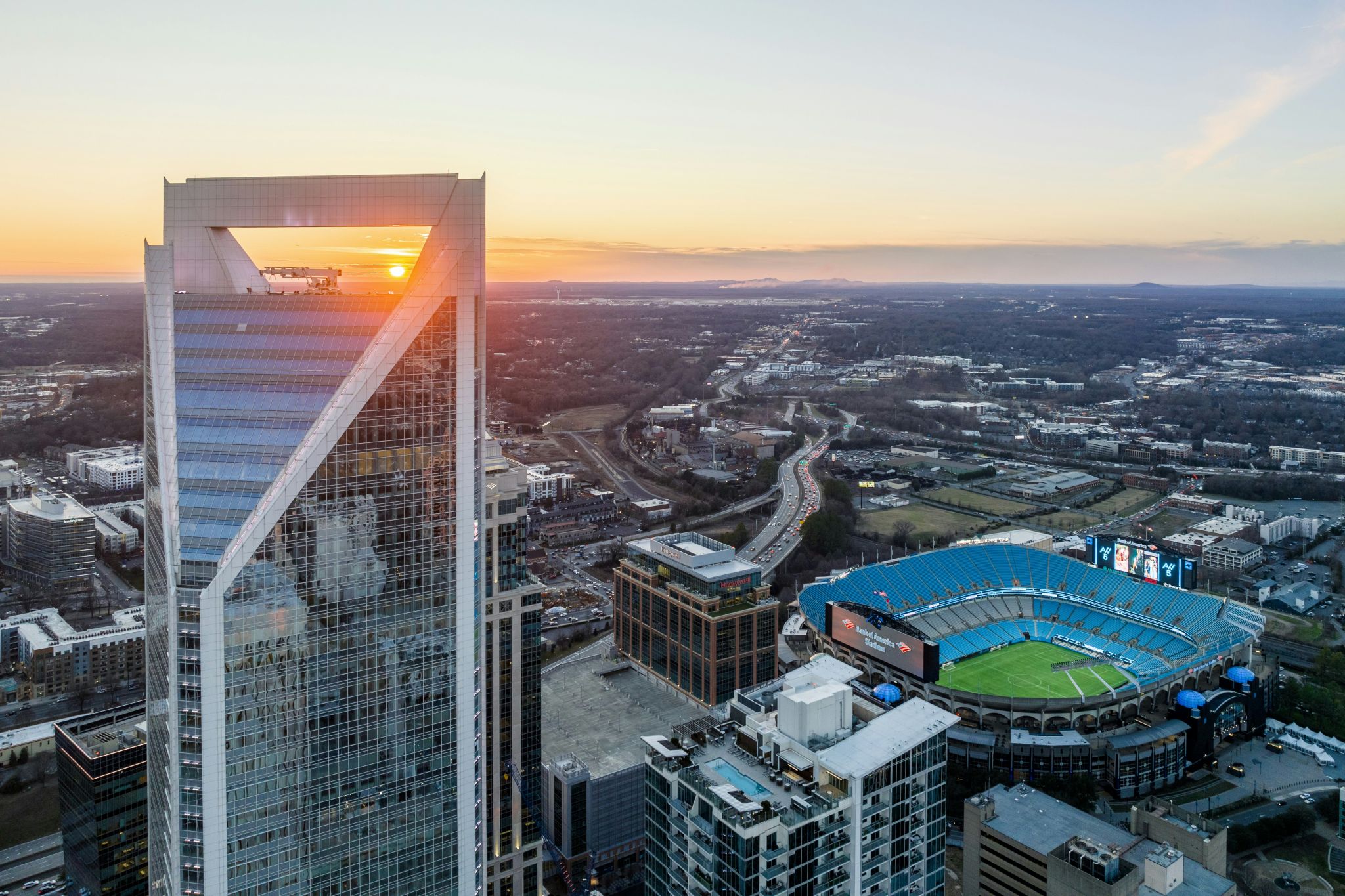
Charlotte Real Estate: A Strategic Guide for Multifamily Investors
Charlotte continues to attract top employers and talent, as evidenced by high renter demand and strong absorption rates. The question for investors is how to participate without relying on exceptional rent increases or heavy-lift renovations. This guide focuses on the fundamentals that actually drive multifamily performance in Charlotte, backed by current data.

The economic engine behind renter demand
Charlotte’s job base is broad and still growing. Net absorption exceeded 3,800 units in the first quarter of 2025, more than 40 percent higher than the same period a year earlier (Northmarq). South Charlotte and East Charlotte led the improvement in vacancy, indicating sustained demand in those submarkets (Northmarq).
Average advertised asking rents sat in the mid-$1,500s to low-$1,600s this year, depending on the data source. Yardi Matrix’s August read showed about $1,594 on a trailing three-month basis through June (Yardi Matrix). Axios, citing CoStar, reported first-quarter averages near $1,644, pointing to a similar trend of stable pricing (Axios Charlotte).
New supply remains high through 2025
Charlotte is experiencing one of its busiest periods for modern apartment construction. Developers delivered 8,337 units in the first half of 2025, equal to 3.5 percent of existing inventory, and Yardi Matrix expects about 18,385 units to be delivered as the year concludes (Yardi Matrix).
Even with this amount of construction, demand has been strong. Northmarq notes that net move-ins exceeded 7,700 units in the first half of 2025, more than doubling the region’s trailing 10-year average, and vacancy has stabilized in large submarkets such as South Charlotte, North Charlotte, West Charlotte, University, and East Charlotte (Northmarq).
Rents have held steady. Yardi Matrix reports that trailing three-month asking rents increased by 0.1 percent through June 2025 and stabilized occupancy at 93.8 percent in May (Yardi Matrix).
Most of the competitive pressure in this environment comes from buildings actively leasing, since these properties are adding the largest share of new units to the market during a short window. Public reporting aggregates results at the metro and submarket level, so performance differences by property age are not broken out (Northmarq).
For investors, the takeaway is straightforward. 2025 has been a big construction year, but the combination of strong absorption, stable rent prices, and steady occupancy suggests that demand is deep enough to work through this supply cycle (Northmarq). Asset selection and submarket positioning remain important, particularly in areas receiving the largest share of new development (RealPage).
New supply remains high through 2025
Charlotte is experiencing one of its busiest periods for modern apartment construction. Developers delivered 8,337 units in the first half of 2025, equal to 3.5 percent of existing inventory, and Yardi Matrix expects about 18,385 units to be delivered as the year concludes (Yardi Matrix).
Even with this amount of construction, demand has been strong. Northmarq notes that net move-ins exceeded 7,700 units in the first half of 2025, more than doubling the region’s trailing 10-year average, and vacancy has stabilized in large submarkets such as South Charlotte, North Charlotte, West Charlotte, University, and East Charlotte (Northmarq).
Rents have held steady. Yardi Matrix reports that trailing three-month asking rents increased by 0.1 percent through June 2025 and stabilized occupancy at 93.8 percent in May (Yardi Matrix).
Most of the competitive pressure in this environment comes from buildings actively leasing, since these properties are adding the largest share of new units to the market during a short window. Public reporting aggregates results at the metro and submarket level, so performance differences by property age are not broken out (Northmarq).
For investors, the takeaway is straightforward. 2025 has been a big construction year, but the combination of strong absorption, stable rent prices, and steady occupancy suggests that demand is deep enough to work through this supply cycle (Northmarq). Asset selection and submarket positioning remain important, particularly in areas receiving the largest share of new development (RealPage).
What the current read means for underwriting
Vacancy tightened early in 2025 because of strong absorption, although not all submarkets have returned to prior highs. Market commentary still notes pressure in supply-heavy metros, Charlotte included, which supports cautious revenue assumptions and an emphasis on execution (Northmarq).
Rents held stable at the metro level. That shifts the return profile toward cash flow and operational performance rather than relying on rapid rent growth. Strong operations, resident retention, and offering a product that fits local renter needs carry more weight in this environment (Yardi Matrix).

Where macro trends support multifamily
Charlotte continues to expand its finance and tech-enabled industries. Recent announcements from SoFi and Tether’s new U.S. regulated stablecoin entity reinforce the city’s strength in these sectors and support renter demand across income tiers (NC Governor’s Office).
Population growth remains strong. State and local tallies place Charlotte near 945,000 residents, widening its lead as the largest city in North Carolina (NC Office of State Budget and Management). This level of growth adds to the renter pool and keeps demand for apartments consistent.
Practical takeaways for investors
- Prioritize submarkets with demonstrated absorption. South Charlotte and East Charlotte showed clear vacancy rate improvement early in 2025 (Northmarq).
- Use the supply timeline when you plan. New projects in 2025 are arriving on schedule, so match your hold period and leasing strategy to that pace. (RealPage).
- Lean on operating discipline. With rents mostly stable and concessions appearing only in supply-heavy pockets, day-to-day operations have a larger impact on performance (Axios Charlotte).
- Use employer growth as a guide. Finance, tech-enabled services, and advanced industry continue to attract renters who value proximity and amenities. Recent corporate expansion suggests ongoing strength (City of Charlotte).
Bottom line
Charlotte will remain a strong multifamily market when the focus stays on operations rather than speculation. The economy continues to create substantial demand. Supply is high but not overwhelming the market. Rents are holding. Together, these trends reward clear underwriting, thoughtful submarket selection, and consistent management.
About Rise48 Equity:
Rise48 Equity is a Multifamily Investment Group with local offices in Phoenix, AZ, Dallas, TX, and Charlotte, NC. “At Rise48 Equity, we provide opportunities for accredited and non-accredited investors to protect and grow their wealth and achieve passive cash flow. Our team brings expertise to acquire, reposition, and return capital to investors upon reaching our business plan. Through our research and strategically formed partnerships, we acquire commercial multifamily apartment properties, strategically add value to the properties, and create passive income for our investors through cash flow and profits from the sale.”
Ready to Explore Investment Opportunities in Dallas?
If you’re looking to learn more about how you can achieve passive cash flow through Rise48 Equity’s multifamily investments in Dallas, schedule a brief call with us today. Let’s discuss how we can help you grow your wealth through strategic real estate investments.