


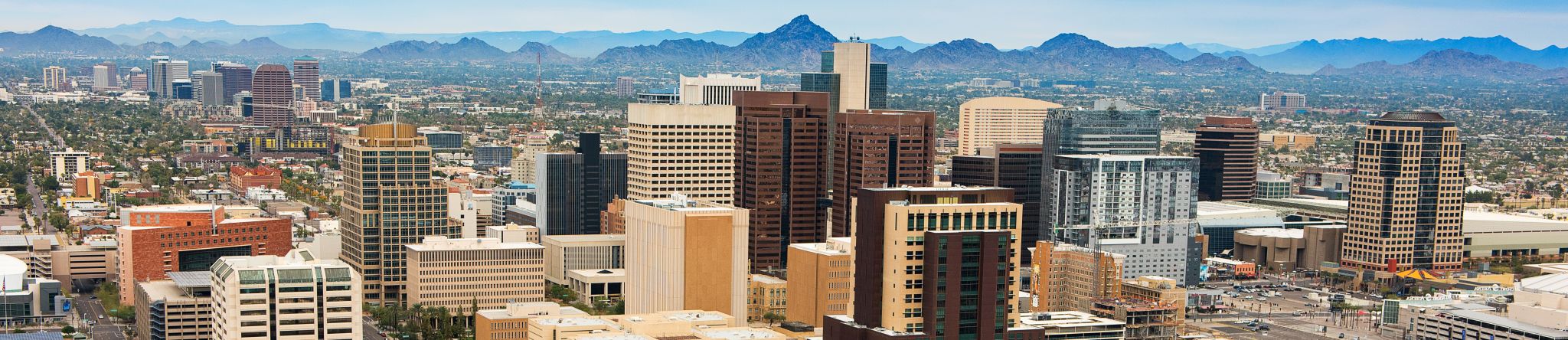
Phoenix grew into the fifth-largest city in the United States through decades of infrastructure investment, demographic change, and restructuring of housing demand. The Valley moved from snowbird haven and refuge for allergy-sufferers to diversified economic center, leaving patterns that determine where multifamily demand concentrates today, which submarkets outperform, and how investors evaluate opportunities.
The Phoenix housing market has weathered boom-and-bust cycles, absorbed hundreds of thousands of new residents, and restructured its economic base multiple times. Each phase created new fundamentals: the 1980s migration wave, the 2008 crash, the corporate relocation period, the pandemic surge. Phoenix multifamily real estate in 2026 reflects the cumulative impact of all those events.
Quick Stats: Phoenix Housing Market Evolution
- Population Growth (2010-2020): Maricopa County added 400,000+ residents (U.S. Census Bureau)
- Price Decline (2006-2011): Phoenix home prices fell 51.9% peak-to-trough (Federal Reserve Economic Data)
- 2021 Migration Leader: Phoenix topped U.S. metros with 66,850 net domestic in-migrants (U.S. Census Bureau)
- Pandemic Rent Surge: Effective rents increased 25% from early 2020 to late 2021 (Yardi Matrix)
- Semiconductor Investment: TSMC and Intel committed over $60 billion to Phoenix-area facilities (Arizona Commerce Authority)
The Sunbelt Migration Foundation: 1980s-1990s
Phoenix’s modern growth story accelerated during the 1980s and 1990s, when affordable housing, warm weather, and lower living costs attracted retirees and families from California, the Midwest, and the Northeast. The Phoenix metropolitan area grew from approximately 1.5 million residents in 1980 to over 3 million by 2000, ranking among the fastest-growing metros nationally (U.S. Census Bureau).
Housing development during these decades followed a predictable pattern: single-family subdivisions sprawling across desert land in Mesa, Chandler, Gilbert, Scottsdale, and the West Valley. Master-planned communities became the development template, offering affordable homeownership and quality-of-life improvements that coastal markets couldn’t match at comparable price points. Multifamily construction remained modest relative to single-family development, concentrated primarily near employment centers, and oriented toward renters transitioning to homeownership.
The economic foundation during this period was largely residential-driven. Construction, retail, hospitality, and healthcare sectors grew in direct response to population increases rather than leading them. Employment followed population, creating a cycle where housing demand depended heavily on continued in-migration and national economic health. When recessions slowed relocation to Arizona and mortgages became harder to qualify for, Phoenix real estate felt the impact quickly. That vulnerability became starkly evident two decades later.
The 2008 Financial Crisis: A Market Reset
The 2008 financial crisis hit Phoenix harder than most major metropolitan areas. Home prices in the Phoenix metro fell approximately 51.9 percent from peak to trough between 2006 and 2011, among the steepest declines in the nation (Federal Reserve Economic Data). Maricopa County recorded over 163,210 foreclosure filings in 2009 alone, representing nearly one in every 17 housing units (EliScholar).
The severity of Phoenix’s housing crash stemmed from rapid appreciation in the mid-2000s, aggressive lending, and speculative development that pushed supply well ahead of employment-supported demand. When credit markets froze and migration slowed, the imbalance became obvious. Outer suburban markets where new construction had outpaced job growth experienced the sharpest price declines and highest foreclosure rates.
The multifamily sector experienced its own reset. New apartment construction effectively halted between 2009 and 2011 as financing disappeared. However, rental demand was relatively resilient. People displaced by foreclosure or unable to qualify for mortgages needed rental options.
Institutional single-family rental investors entered Phoenix aggressively during this period and converted distressed owner-occupied homes into rental properties. The introduction of these investors changed neighborhood composition in many submarkets and introduced professional capital to segments of the housing market that had been predominantly individual ownership (The Wall Street Journal).
Employment Diversification and Corporate Relocations: 2012-2019
Phoenix’s economic foundation changed in the years following the housing crisis. The Valley won significant corporate relocations that brought higher-wage employment.
State Farm relocated thousands of employees to a campus in Tempe. USAA opened a major office in Phoenix’s Midtown district. Charles Schwab expanded its Lone Tree campus. Technology firms, including GoDaddy, Carvana, and ZipRecruiter, substantially expanded their Phoenix operations (Greater Phoenix Economic Council).
This corporate activity changed investing basics in the Valley in significant ways:
Employment opportunities supported housing demand without relying on population growth alone.
Attracted younger, educated workers who rented longer before buying homes.
Diversified the economic base beyond construction, retail, and hospitality.
Maricopa County added over 400,000 residents between 2010 and 2020 as employment composition shifted (U.S. Census Bureau). Professional and business services, financial activities, and technology sectors grew faster than construction and retail (Bureau of Labor Statistics).
Apartment construction accelerated, particularly in Tempe, downtown Phoenix, and Scottsdale. Infrastructure investment created destination neighborhoods with restaurants, entertainment, and lifestyle amenities that gave renters reasons to stay after work hours.
The Pandemic Acceleration: 2020-2022
The COVID-19 pandemic amplified existing trends in Phoenix real estate. Remote work policies gave people an option to relocate from expensive coastal markets where they could find larger living spaces, lower costs, and favorable tax environments.
Phoenix ranked as the top destination for net domestic migration in 2021, with approximately 66,850 more people moving in than moving out (U.S. Census Bureau). Home prices increased over 30 percent in 2021 alone (Zillow).
Multifamily rents increased approximately 25 percent between early 2020 and late 2021 (Yardi Matrix). The rent surge hit Class A properties hardest. Premium one-bedroom apartments averaged $1,700 to $2,100 monthly, with two-bedrooms reaching $2,200 to $2,800 (City of Phoenix). Class B and Class C properties absorbed demand from renters priced out of new construction.
The pandemic accelerated Phoenix’s emergence as an advanced manufacturing hub. TSMC announced construction of a $12 billion semiconductor facility in North Phoenix in 2020, later expanding plans to exceed $40 billion total investment (TSMC). Intel announced a $20 billion expansion in Chandler (Arizona Commerce Authority). These investments created thousands of high-wage jobs for years to come.
Housing costs rose faster than incomes (Joint Center for Housing Studies, Harvard University). By late 2022, home price growth slowed and multifamily rent growth decelerated as new supply entered and affordability weighed on demand.

Today’s Market: Maturity and Submarket Differentiation
As of 2026, Phoenix operates in a different environment. The economy is more diversified, employment growth is anchored in higher-waged jobs, and housing demand reflects multiple factors.
The Phoenix metro’s population surpassed 5 million in 2024, with employment at approximately 2.5 million (Bureau of Labor Statistics). Semiconductor manufacturing, aerospace, logistics, and technology sectors support housing demand long-term.
Rent growth moderated to approximately 2-3 percent annually in 2024-2025 (CoStar). Occupancy stabilized in the low-to-mid 90 percent range. The moderation benefits Class B and Class C properties that compete on value. When rents aren’t climbing 20 percent annually, renters focus on location and price over newest construction.
Employment-dense regions near semiconductor facilities, corporate campuses, and transit infrastructure demonstrate stronger fundamentals. Outer suburban markets are more sensitive to affordability constraints and commute patterns.
Investors are underwriting properties based on in-place income and operational performance rather than speculative appreciation. Value-add strategies require genuine operational improvements. Hold periods are lengthening as growth is layered across sectors and submarkets.
What This Evolution Means for Investors in 2026

What This Evolution Means for Investors in 2026
Population growth no longer drives performance alone. Employment composition, wage growth, submarket infrastructure, and affordability dynamics all influence where multifamily assets perform.
Prioritize submarkets near major employment centers tied to semiconductors, aerospace, healthcare, financial services, and professional services. The concentration of high-wage employment near Tempe, Chandler, North Phoenix, and Scottsdale creates distinct demand patterns. Properties offering wage-aligned rents, efficient operations, and limited deferred maintenance maintain occupancy and pricing power. Value-add strategies should target genuine operational improvements rather than assuming market-wide rent growth covers underwriting gaps.
Phoenix’s economic diversification reduces concentration risk but doesn’t eliminate cyclicality. Conservative underwriting, stress-tested rent assumptions, and realistic hold periods are necessary. Infrastructure investment matters more than in previous cycles. Submarkets with transit access, highway connectivity, and proximity to employment corridors outperform those dependent primarily on affordability advantages.
About Rise48 Equity:
Rise48 Equity is a Multifamily Investment Group with local offices in Phoenix, AZ, Dallas, TX, and Charlotte, NC. “At Rise48 Equity, we provide opportunities for accredited and non-accredited investors to protect and grow their wealth and achieve passive cash flow. Our team brings expertise to acquire, reposition, and return capital to investors upon reaching our business plan. Through our research and strategically formed partnerships, we acquire commercial multifamily apartment properties, strategically add value to the properties, and create passive income for our investors through cash flow and profits from the sale.”
Ready to Explore Investment Opportunities in Phoenix?
If you’re looking to learn more about how you can achieve passive cash flow through Rise48 Equity’s multifamily investments in Phoenix, schedule a brief call with us today. Let’s discuss how we can help you grow your wealth through strategic real estate investments.
