North Texas entered April 2026 with a month’s worth of economic data, corporate announcements, and infrastructure milestones that collectively reinforced the region’s standing as the most dynamic large-metro economy in the United States. This month, the Dallas Federal Reserve forecast 278,400 new Texas jobs for 2026. Bell broke ground on a $632 million defense manufacturing plant in Fort Worth. Fort Worth crossed the one-million-resident threshold, joining Dallas to make DFW the only metro in the country with two million-plus cities. D CEO Magazine identified seven new development projects shaping North Texas. Arlington released its Q4 development profile showing an active construction pipeline. And Plano’s ongoing AT&T and Toyota campus expansions continued to generate thousands of new employment commitments in Collin County.
Employment: The Dallas Fed’s April 2026 Forecast
The Dallas Federal Reserve released its Texas Employment Forecast, projecting 278,400 new jobs in 2026 at a 1.9% growth rate. (Dallas Federal Reserve). CBS Texas reported this month that the forecast reflected Texas’s structural advantages over competing states: a business-friendly regulatory environment, no state income tax, and a deep workforce pipeline (CBS Texas). North Texas consistently claims the largest share of state employment growth, and the region’s labor market expansion is expected to remain among the strongest in the country through 2026 and into 2027.
Dallas Innovates confirmed this month that 45 North Texas companies made Inc. Magazine’s Southwest Fastest-Growing Companies list for 2026, with Dallas-based JobTread Software ranking fifth overall (Dallas Innovates). Separately, Fast Company’s 2026 Most Innovative Companies list featured seven DFW firms in April (Dallas Innovates), reinforcing the region’s emergence as a destination for high-growth companies and the educated young professionals they employ.
Corporate Investment: Bell, AT&T, and the Plano Corridor
Dallas Innovates reported this month that Bell has begun construction on a $632 million factory in North Fort Worth to build components for the U.S. Army’s military aircraft (Dallas Innovates). The Bell investment adds to what is already Fort Worth’s strongest year on record – in 2025, the city attracted $6.7 billion in new capital investment and 6,900 new and retained jobs. Defense and aerospace manufacturing is now establishing a second major employment corridor alongside Fort Worth’s existing strengths in transportation, finance, and healthcare, creating a more diversified economic base that strengthens the region’s long-term resilience.
Additionally, Plano is also receiving exciting news as AT&T’s new global headquarters campus continued to advance, targeting up to 10,000 jobs with partial occupancy expected in late 2028 (Local Profile / Plano City Council). Toyota’s Plano campus is simultaneously expanding to accommodate electrification strategy teams, adding hundreds of new engineering and executive roles. JPMorgan Chase’s Plano headcount is projected to reach 7,500 by mid-2026 (Local Profile). And WalletHub’s 2026 Best Places to Find a Job report ranked Plano seventh nationally and first in median annual income adjusted for cost of living, reflecting the high-income employment base that has made northern Collin County one of the most economically competitive submarkets in the country (Local Profile).
“Fort Worth had a banner fiscal year in economic development with $6.7 billion in new capital investment and more than 6,900 in new and retained jobs, the city’s strongest year in more than a decade.” Fort Worth Economic Development Partnership
Population: Fort Worth Crosses One Million
Fort Worth officially surpassed one million residents in 2024, making it the 11th largest city in the United States, larger than Denver, San Diego, and Austin. DFW is now the only metropolitan area in the country with two cities exceeding one million residents (Fort Worth Economic Development Partnership). Axios Dallas reported that DFW added 123,557 residents between July 2024 and July 2025, approximately 339 new residents per day. That pace ranked the metro second nationally in total population increase (Axios Dallas). While Fort Worth’s annual growth rate of 2.05% continues to outpace most large American cities. Collin County added 42,966 residents in the same period, ranking second in the nation.
The North Dallas Gazette also highlighted DFW’s affordability advantage: consumer prices in the metro fell 0.3% year-over-year through January 2026, while the rest of the country saw prices climb 2.4% (North Dallas Gazette).
Development Pipeline, Infrastructure & FIFA World Cup Impact
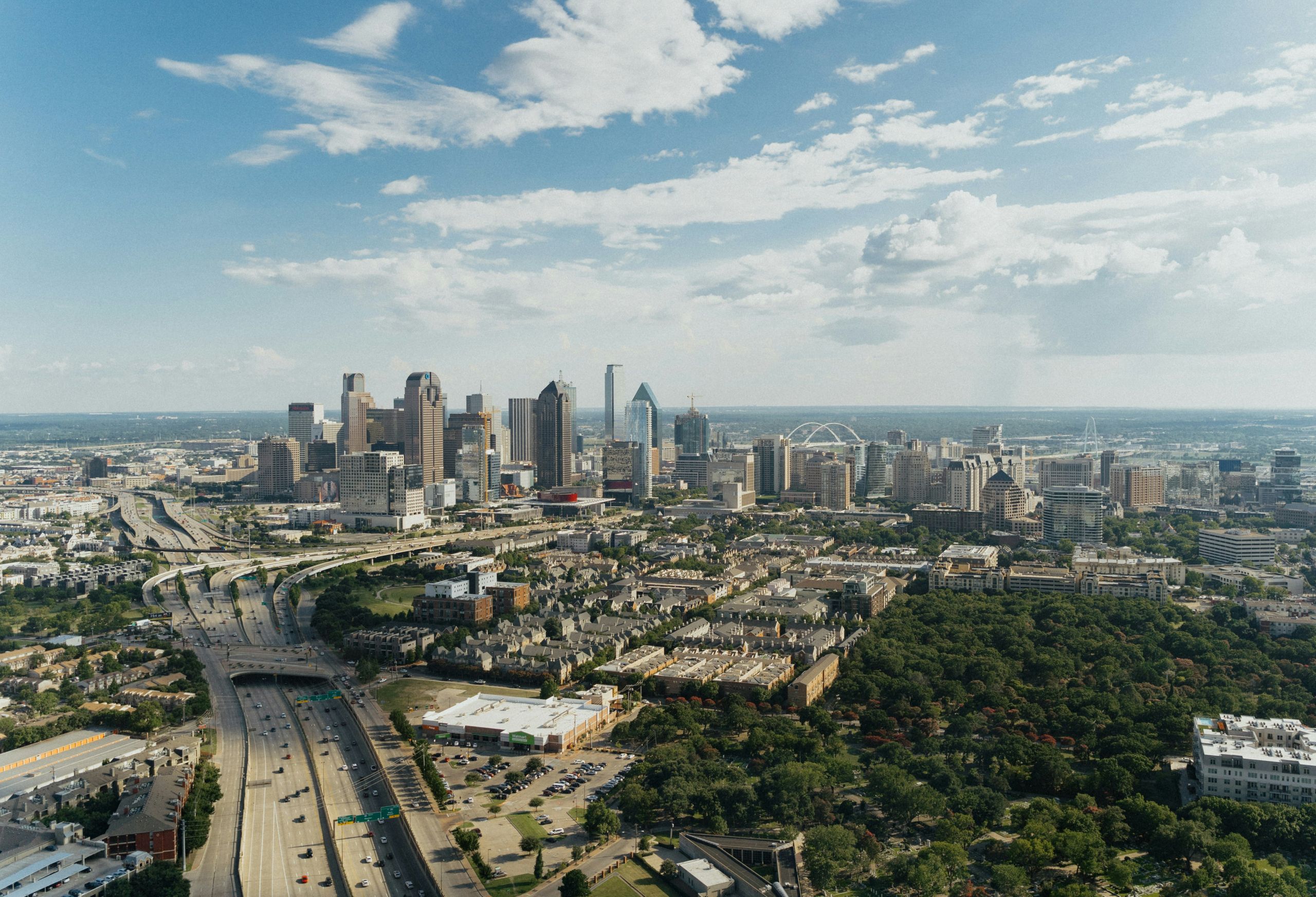
D CEO Magazine profiled seven new development projects shaping North Texas’s growth trajectory (D CEO Magazine). Dallas Innovates also reported that DFW has reclaimed the nation’s top spot in industrial development, with 28.8 million square feet under construction, a 27% year-over-year increase (Dallas Innovates).
Fort Worth Report documented a planning and zoning approval this month for commercial development along Debbie Lane in south Arlington (Fort Worth Report).
Arlington’s city government also released its Q4 development profile, showing an active construction pipeline across residential, commercial, and infrastructure categories (City of Arlington).
This month, the Garland Economic Development Partnership reported that Garland was named among the nation’s 50 Best Cities for Job Seekers Over 50, reflecting the city’s diverse and mature employment base spanning more than 300 manufacturers (Garland EDP).
“Between the Arlington Grand Prix and nine matches for the 2026 FIFA World Cup, there are big things happening in Arlington. The city’s prime location, proximity to an upskilled workforce graduating from UT Arlington, and business-friendly economy make it a hotspot for corporate headquarters relocations.” Texas Economic Development Corporation, 2026 Regional Profile
Arlington’s hosting of nine FIFA World Cup matches at AT&T Stadium, the most of any city in North America, is projected to generate approximately $2 billion in economic impact for North Texas and expose the region to an estimated 3.8 million visitors (KERA News). The global spotlight on Arlington and the DFW metro sustained over a 39-day tournament window generates lasting brand exposure that accelerates subsequent business location and relocation decisions. Events of this magnitude have consistently produced measurable increases in professional in-migration in the 12 to 24 months following the event.

Data Centers, Industrial Development & the Texas Market’s Depth
Fort Worth was weighing a proposed incentive package this month for a $1.1 billion Edged data center campus on the city’s west side (Fort Worth Inc.). The project is part of a broader Texas data center buildout: the state represents nearly one-fifth of all planned U.S. data center investment in 2026, with more than $97 billion in potential projects statewide. Stack Infrastructure separately announced over $1.4 billion in DFW data center projects across Fort Worth and Plano (Data Center Dynamics).
Texas suburbs continued to lead U.S. population growth this month, with Collin County ranking second nationally in population gain according to new census data (Texas Tribune). Domestic in-migration remained the primary growth driver even as international migration moderated. Fort Worth’s 98-project development pipeline, spanning 44 company expansions and 54 new-to-market companies, reflects the sustained breadth of activity across the North Texas market heading into the second half of 2026.
Conclusion
April 2026 reinforced the breadth and depth of North Texas’s economic expansion. The Dallas Fed’s job forecast, Fort Worth’s million-resident milestone, Bell’s $632 million groundbreaking, AT&T’s and Toyota’s ongoing Plano commitments, and Arlington’s active construction pipeline all pointed to a region where growth is distributed across sectors and geographies.
Population migration from higher-cost states continued at one of the highest rates in the country. Heading into the second half of 2026, North Texas’s employment base, infrastructure pipeline, and demographic trajectory remain among the strongest of any major metro in the United States.
About Rise48 Equity:
Rise48 Equity is a Multifamily Investment Group with local offices in Phoenix, AZ, Dallas, TX, and Charlotte, NC. “At Rise48 Equity, we provide opportunities for accredited and non-accredited investors to protect and grow their wealth and achieve passive cash flow. Our team brings expertise to acquire, reposition, and return capital to investors upon reaching our business plan. Through our research and strategically formed partnerships, we acquire commercial multifamily apartment properties, strategically add value to the properties, and create passive income for our investors through cash flow and profits from the sale.”
Since 2019, Rise48 Equity has completed over $2.4 Billion+ in total transactions and currently has $2 Billion assets under management located in Arizona, Texas, and North Carolina. All of the company’s assets under management are managed by Rise48 Equity’s vertically integrated property management company, Rise48 Communities.