Introduction: North Carolina’s Growth Story Continues to Build
North Carolina continues to reinforce its position as one of the most attractive growth markets in the Southeast. March 2026 highlights a consistent theme seen over the past year: expansion across multiple sectors, including financial services, technology, industrial development, retail, and mixed-use real estate.
Charlotte remains the focal point of much of this activity, with major employers scaling operations, new developments reshaping key corridors, and population growth continuing to drive demand across housing and retail. At the same time, infrastructure and industrial expansion across the region signal that growth is not isolated — it is spreading across the broader metro and state.
What makes North Carolina particularly compelling is its balance. Corporate investment is supported by strong in-migration, workforce development, and lifestyle-driven demand. This combination creates a durable growth model that continues to attract both businesses and long-term capital.
Citigroup Expands in Ballantyne with Tech and Banking Jobs
Citigroup is expanding its presence in Charlotte’s Ballantyne submarket, adding new office space and increasing hiring across both technology and banking roles (Charlotte Business Journal). The company plans to grow its Charlotte workforce from 275 employees to roughly 400 employees by the end of April and expand to about 800 people over the next three years.
Ballantyne has emerged as one of the region’s most important suburban employment hubs, attracting major financial institutions and corporate tenants seeking modern office environments outside of Uptown. Citigroup’s expansion reinforces the submarket’s growing importance as a center for high-skilled employment, particularly in fintech and enterprise technology. (Charlotte Business Journal).
The addition of both tech and banking roles highlights an important shift in Charlotte’s economic identity. The city is no longer defined solely by traditional banking, it is evolving into a hybrid financial and technology hub. This diversification strengthens long-term resilience and attracts a broader talent pool. “We looked around, especially the United States, and we looked at the quality of talent, quality of life, the business friendly environment here in Charlotte, it really became a no brainer,” said Ed Skyler, Citi’s head of enterprise services and public affairs. (Charlotte Business Journal).
River District Development Advances with Office, Retail, and Hotel Plans
Plans for the River District continue to move forward, with a large-scale mixed-use vision that includes office space, retail, and hospitality components (Axios Charlotte). The River District represents one of the most significant development projects in the Charlotte region. Its scale and scope reflect long-term confidence in population growth and economic expansion. Mixed-use developments of this nature are designed to create self-sustaining environments where residents, employees, and visitors can live, work, and spend time in a single area.
From a market perspective, large mixed-use projects signal forward-looking investment. Developers commit capital years in advance based on expectations of sustained growth in population, employment, and consumer demand. The inclusion of office, retail, and hotel components indicates confidence across multiple sectors simultaneously. Meanwhile, projects like the River District serve as leading indicators of future growth corridors. As development progresses, surrounding areas often experience increased land values, housing demand, and commercial activity, reinforcing long-term investment potential.(Axios Charlotte).
Population Growth Continues to Drive Charlotte’s Expansion
Charlotte continues to attract new residents at a strong pace, driven by job opportunities, affordability relative to coastal markets, and quality of life factors (Jay White Group). Migration remains one of the most important drivers of economic growth. As individuals and families relocate to North Carolina, they bring income, demand for housing, and long-term consumption patterns that support local businesses.
Charlotte’s appeal is rooted in its balance, offering career opportunities in finance, technology, and healthcare, while maintaining a lower cost of living than many competing metros. This combination continues to draw both young professionals and families. “The job market is strong, the housing market remains relatively balanced compared to other fast-growing metros, and the lifestyle flexibility allows people to stay in the region through multiple stages of life.” (Jay White Group).
Unlike short-term economic fluctuations, population growth creates lasting demand. As residents establish roots, they contribute to sustained economic activity through housing, education, healthcare, and everyday consumption. This consistency strengthens long-term stability across the region.

Industrial and Manufacturing Expansion Adds Long-Term Stability
Industrial development continues across the Charlotte region, with new facilities and expansions supporting logistics and manufacturing activity (Charlotte Business Journal) These projects are often tied to regional supply chains and require long-term operational commitments.
Trench Group, a Siemens-affiliated company, is advancing manufacturing operations that will support power infrastructure and energy systems, adding technical and production jobs to the region (Charlotte Business Journal). These roles typically provide stable wages and long-term employment, contributing to a balanced labor market.
Industrial and manufacturing investments require significant capital and are not easily relocated, which adds a layer of durability to the local economy. This type of growth complements the expansion of financial and technology sectors, creating a more diversified economic base.
Technology and IT Services Expansion Strengthens Employment Base
Technology and IT services firms continue to expand across Charlotte, adding roles tied to cybersecurity, enterprise platforms, and digital infrastructure (Charlotte Business Journal). Much of this growth is closely tied to the region’s financial sector, as banks and financial institutions invest heavily in technology capabilities.
These positions typically offer higher wages than regional averages and contribute to increased household income levels. As a result, they support stronger demand for housing, particularly in higher-end multifamily and single-family markets, while also driving spending across retail and service sectors.
Charlotte’s technology growth is notable for its stability. Rather than relying on early-stage startups, much of the hiring is driven by established companies with long-term operational needs. This creates a more predictable and sustained pattern of employment growth.
“Charlotte continues to emerge as one of the fastest-growing technology and business hubs in the Southeast,” Ciaran Hamilton, Tecnetics’s CEO and co-founder, told CBJ. “The region has seen significant growth in financial services, health care, logistics and corporate headquarters, all sectors that rely heavily on modern digital infrastructure and collaboration technologies. Given our existing client relationships in the Northeast and the strong demand for integrated technology services, Charlotte was a natural next step in our national expansion strategy.” Charlotte Business Journal).
Retail and Restaurant Expansion Reflects Sustained Consumer Demand
Retail and restaurant expansion continues across the Charlotte area, reflecting strong consumer demand driven by population growth and rising household incomes. A new Japanese dining concept in Plaza Midwood highlights continued investment in high-traffic urban neighborhoods (Charlotte Business Journal)
At the same time, Whataburger is planning additional locations across the Charlotte region, targeting areas with strong vehicle traffic and population density (Yahoo News). National brands typically expand only after identifying consistent demand patterns, making these openings a strong indicator of market health.
Restaurant and retail growth follows rooftops and income. As more residents move into the region and employment expands, consumer-facing businesses scale to meet demand. This reinforces the strength of mixed-use developments and neighborhood-level commercial activity.

Banking Expansion Reinforces Charlotte’s Financial Strength
Banking expansion remains active across Charlotte, with institutions continuing to open new branches in growing submarkets (Axios Charlotte). Despite the rise of digital banking, physical locations remain essential for relationship-driven services such as small business lending, mortgages, and wealth management.
Branch expansion reflects confidence in long-term population growth and economic activity. Financial institutions invest in physical presence where they expect sustained deposit growth and customer relationships.
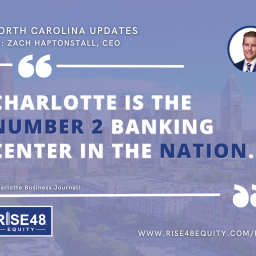
Charlotte’s continued banking expansion reinforces its position as one of the leading financial centers in the country. The concentration of financial institutions supports capital flow, lending activity, and overall economic growth across the region.
Regional Economic Activity Reflects Continued Business Expansion
Recent reporting highlights continued business activity across the Charlotte region, with companies expanding operations and investing in facilities that support long-term growth. The article points to ongoing momentum in sectors tied to services, infrastructure, and local business development, reinforcing the steady pace of economic expansion already seen throughout early 2026. ( Charlotte Observer)
What stands out is the consistency of this activity across different industries. Rather than relying on a single major announcement, the region is seeing a steady pipeline of smaller and mid-sized business investments. These types of expansions often fly under the radar but collectively contribute meaningful job creation, increased commercial occupancy, and broader economic stability. ( Charlotte Observer)
This pattern of incremental growth is particularly important because it signals a healthy underlying economy. When multiple businesses across sectors are expanding at the same time, it reflects sustained demand rather than short-term spikes. Over time, this layered growth strengthens employment, supports local spending, and reinforces Charlotte’s position as a stable and continuously growing market.
Conclusion: Growth Backed by Measurable Fundamentals
March 2026 highlights a consistent pattern across North Carolina: growth is being driven by real, measurable factors. Corporate expansions are adding high-skill jobs, population growth is increasing housing demand, and large-scale developments are shaping future economic centers.
Industrial and manufacturing investments provide long-term stability, while technology and financial services expansion drive income growth and capital concentration. At the same time, retail and restaurant activity reflects strong consumer demand supported by rising population levels.
This combination creates a balanced economic structure where multiple sectors contribute to growth. Rather than relying on a single industry, North Carolina continues to build a diversified economy that supports sustained expansion.
As 2026 progresses, the alignment between job creation, population growth, and capital investment continues to position North Carolina as one of the most durable and scalable markets in the Southeast.
About Rise48 Equity:
Rise48 Equity is a Multifamily Investment Group with local offices in Phoenix, AZ, Dallas, TX, and Charlotte, NC. “At Rise48 Equity, we provide opportunities for accredited and non-accredited investors to protect and grow their wealth and achieve passive cash flow. Our team brings expertise to acquire, reposition, and return capital to investors upon reaching our business plan. Through our research and strategically formed partnerships, we acquire commercial multifamily apartment properties, strategically add value to the properties, and create passive income for our investors through cash flow and profits from the sale.”
Discover the Future of Investment with Rise48 Equity
Unlock the potential of passive cash flow through Rise48 Equity’s Charlotte multifamily investments. Speak with our experts to learn how you can grow your wealth and achieve your financial goals by scheduling a personalized consultation today.